

Meowsis Stem Case Gizmo Answers
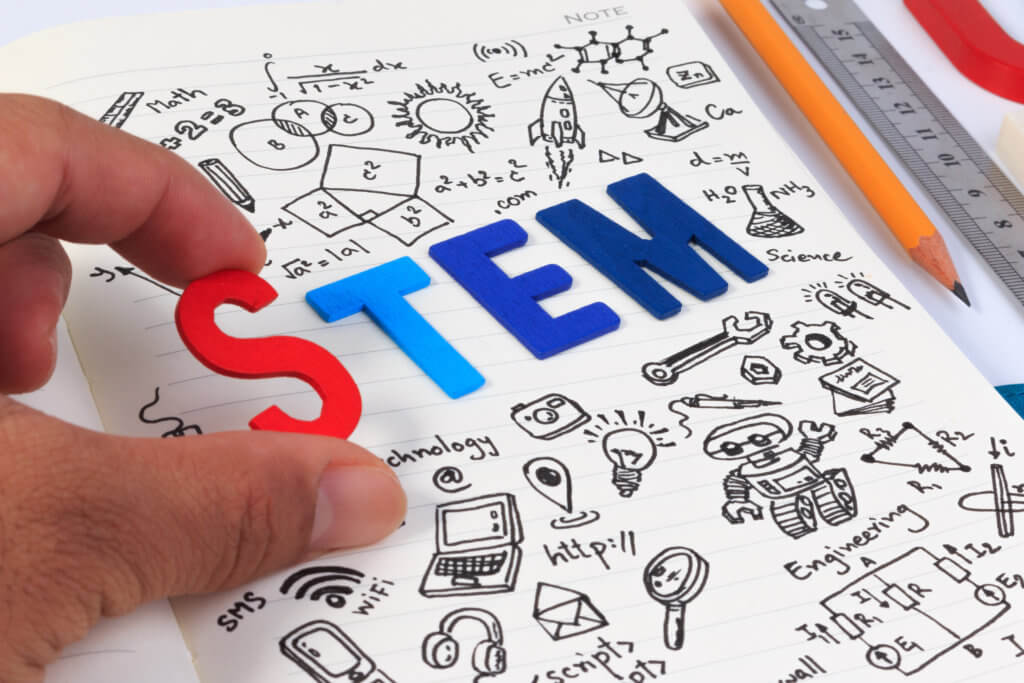
What is STEM? Where did the term come from? Why is information technology so important in the modern world? All of these are good questions, ones that this post addresses.
The brusque answer to this question is that the STEM acronym stands for science, technology, engineering and mathematics, and these disciplines have been identified as the foundation of innovation and economic growth in the United States. Technology companies, engineering service firms and scientific research organizations contribute heavily to the country's wealth and security. However, government agencies similar the National Science Foundation have noted the decline of the unique skill fix that is needed to continue the U.S. as a top market place for innovative products and services. Recently, government agencies at the federal, state, and local levels have joined forces to promote technical literacy at all educational activity levels. Here are some examples of the promotion of technical literacy within early childhood development, master schools, and secondary schools.
History and Background of Stem
According to the Pittsburgh Post Gazette, Dr. Judith Ramaley created the term "STEM" while she was working at the National Science Foundation. In her role as the Director of Education and Human Resources Directorate, she noticed that the acronym "SMET," the precursor to STEM, seemed to emphasize math and science over the other Stalk subjects, technology and engineering.
The reality is there is a connection betwixt all of the Stem subjects, something that Dr. Ramaley wanted to emphasize. Her suggestion to changing the acronym from SMET to Stalk addressed this shift in mindset.
It should also be noted that while information technology may seem that Stem only includes the hard sciences, similar chemistry, biological science, and astronomy, the word includes and so much more. "Soft sciences," like psychology, anthropology, economics, and archæology, are also included in the STEM acronym.
Early Babyhood Development of Math and Science Skills
Findings of education researchers have resulted in vast improvements in the ways that teachers, parents, and local communities approach the early learning environment. For case, educators now realize the importance of experiential learning opportunities to capture a educatee's attention and cement learning concepts. The application of experientially based curricula is a trend that has been adopted by early on babyhood educators as well as those who teach students at the university level. Preschool instructors currently use the technique in a variety of ways to introduce integrated math and science concepts to their young students. Some of these teachers create outdoor classrooms where they allow their students to investigate and collect natural objects like rocks, flowers, or bugs; the teachers then encourage their children to think nigh mathematical concepts equally they add to their collection or lose some of their finds. Educators accept found that these outdoor experiences help children to remember traditional classroom instruction about the basics of math and science.
The ideal effect of this new, interactive approach to early learning is that preschool and kindergarten historic period students are better prepared to larn more advanced math and scientific discipline concepts at the master school level.
Bringing a Technical Perspective to Primary School Education
Primary school teachers are getting widespread support for their efforts to incorporate age-advisable, technical topics into their classroom discussions. Traditionally, they have used specially crafted activities for their students as a basis to ask them questions most any number of subjects. Now the emphasis is on request questions about design and experimentation that lead to the absorption of math, science, and engineering principles. Parents, community organizations, and local businesses have been enlisted to assist these educators in as many means equally possible to promote activities for early technical literacy through the Brainwash to Innovate Initiative. Even public universities assistance promote the initiative past offering primary school teachers additional, subject-specific training.
Secondary Schools Specialize in STEM
When students reach their middle and high school years, many are ready to focus well-nigh of their academic schedules to the pursuit of science, engineering, engineering, and math topics. Teachers of middle school students include technical projects into their lesson plans then that students can bear guided research, experiments, and prototyping. Many of the land's loftier schools like High Technology High School in New Jersey and Thomas Jefferson High School for Science and Technology in Virginia are known to be centers of academic excellence for science, technology, engineering, and mathematics. Many high schools that do not accept a technical specialty nevertheless offering students avant-garde placement courses in math and science.
While many people in the past have shied away from studying Stem subjects in college, that trend is changing. Present, 32% of the baccalaureate degrees that students earn are earned in STEM fields. These degrees are in subjects like biological sciences, technology, earth and atmospheric science, psychology, information science, and more. Additionally, many of the advanced degrees that are conferred are in Stalk subjects. 21% of them are master's degrees and 54% of them are doctoral degrees, co-ordinate to the Pittsburgh Post Gazette.
Innovative Means to Comprise Technology Into the Classroom
While all Stalk subjects are of import, educational technology plays a special part in this equation. These days, instructors and students alike employ engineering science in order to augment their learning experiences. In other words, they use technology to assist them to ameliorate understand other STEM subjects like math, scientific discipline, or engineering, as well equally non-Stem topics like art or English. Engineering science is both a Stalk subject and a media tool for learning other subjects.
In contempo years, teachers have introduced video games, similar Minecraft, as a teaching tool to corking upshot. According to EdSource.org, teachers can use Minecraft and other video games to teach computer science and coding, likewise as academic subjects like history or foreign languages. The beauty of bringing game-play into the classroom is that it appeals to students who might otherwise feel bored in class. Some accept even likened video games to "well-written textbooks." However, they're much more interactive and engaging, which is a cardinal reason why they are such constructive learning tools.
Educators who honey video games every bit a teaching tool appreciate the qualities that are unique to video games. Information technology'due south sometimes hard to determine how well a student has really mastered a bailiwick. This requires testing and retesting. Withal, the construction of many video games is such that players cannot advance to the side by side level until they principal the level they are on. This provides educators with a much more solid assessment of a educatee'south skill levels.
Some games, similar Minecraft, offer users more than opened-ended game-play in that these users can take the foundation provided past the game and create their own educational games and simulations inside the confines of the game. This makes them ideal for instructors of all stripes, regardless of what subjects they teach.
Other games, like Dragon Box, have been created with more specific uses in mind. In the instance of Dragon Box, players utilize the game to learn more than abstruse and advanced math concepts, making games like this ideal for the Stalk classroom. If that weren't impressive enough, The states News and Globe Study highlights a game, FoldIt, created by the University of Washington, which solved a key problem in AIDS enquiry. This educational video game combined key concepts in science and engineering to deliver basis-breaking, real-world results.
Challenges to Implementing Technology in the Classroom
Few would argue that investing in educational technology is of import. However, that doesn't mean that implementing educational engineering science in the classroom is without its challenges, which often arise from a lack of funding. This funding shortfall affects students personally, too as teachers and fifty-fifty schoolhouse districts.
Information technology'south nearly impossible to take a discussion most Stalk without mentioning what's known every bit the digital separate. This refers to people's ability to access communication and information technology. More specifically, the issue with the digital split pertains to the difficulty that some regions and demographics have when it comes to accessing technology.
When the term "digital carve up" was initially introduced in the 20th century, it referred to a lack of access to telephones, according to Tech Target. Today, the term refers to those who have admission to broadband Internet (and the tools necessary to admission the Internet) and those who don't. Many times, this shortfall comes as a result of budget. In lower-income areas, students may not have access to the Net at dwelling house nor a computer.
Very often, those who exercise non have abode admission to a computer tin right this shortfall in the library'south or the local community center's computer lab. That said, recent COVID-19-related events accept demonstrated the weakness of this approach. With many students and teachers ordered to remain at home, the access to engineering that these students would take gotten at the library or community center goes away.
Conclusion
Statistics show that many students who enroll in technical or scientific related majors at the university level oftentimes change majors considering they discover the piece of work as well challenging. Early babyhood, main school, and secondary school Stem-related course work helps to make sure that students are prepared to enter technical programs at the university level without heavy reliance on remedial preparation.
Additionally, at that place is new hope for Stem didactics methods that may make learning these subjects more engaging. Many educators are now turning to educational technology to eternalize their lessons. In detail, educational video games have really shown promise, peculiarly in the STEM classroom.
Nonetheless, for all of the advances made in promoting Stem education, there is nonetheless a question of admission. The digital divide, which is a technology-related problem that affects all areas of learning, including in Stalk, disproportionately affects lower-income communities.
Students who have little to no access to the Internet and to educational technologies, similar tablets, video games, and the Internet, come into the educational and work worlds at a disadvantage. The effects of this shortfall have far-reaching consequences. In this respect, the question "What is STEM?" takes a backseat to other, more than pressing questions, similar "How can all students access science, technology, applied science, and math in order to compete in both the bookish and piece of work worlds?"

Meowsis Stem Case Gizmo Answers,
Source: https://www.greatvaluecolleges.net/faq/what-is-stem/
Posted by: millerwhismily.blogspot.com
0 Response to "Meowsis Stem Case Gizmo Answers"
Post a Comment